This ongoing research explores immersive and haptic technologies within complex training environments. My role focuses on building the evidence base, comparing technological approaches and defining rigorous evaluation methods to support subsequent research and development decisions.
Research frameworkFIG / 06
Visual note
Evidence review and technology comparison narrowing into questions, criteria, protocols and future evaluation.
How can unlike immersive and haptic approaches be compared without treating technical capability as evidence of effectiveness for people?
These systems can combine different feedback modalities, interaction models, sensors and contexts of use. The research therefore needs to establish what approaches exist, what evidence supports them, how they can be compared and which human-centred measures are appropriate for subsequent evaluation. This is not a conventional usability study; it is the groundwork required to design subsequent empirical evaluation rigorously.
Research approach
Move from a broad technology landscape to testable questions
Evidence base
Map the field before narrowing the question
Structured searches, evidence screening and synthesis establish which technologies, capabilities, limitations and evaluation methods are already documented.
Comparable frame
Describe unlike technologies with the same questions
Each approach is considered through interaction modality, feedback type, capability, limitation, integration needs, available evidence and suitable evaluation contexts.
Empirical design
Turn evidence gaps into a protocol
Remaining questions inform scenarios, evaluation criteria, comparison conditions, protocol decisions and the selection of behavioural, physiological, self-reported and performance measures.
Research foundations
From landscape to evaluation design
01 / Evidence review
Build an evidence base that can be traced
The review uses structured search strategies, evidence screening and synthesis to understand existing technologies, their capabilities and limitations, interaction and feedback approaches, previous evaluation methods and relevant human-centred outcomes.
02 / Technology benchmarking
Make different approaches comparable
The benchmark creates a shared description for technologies that are not directly equivalent.
Interaction modality
Type of feedback
Capabilities and limitations
Integration considerations
Available research evidence
Suitability for different evaluation contexts
03 / Evaluation design
Use the review to shape empirical research
The evidence gaps are translated into research questions, study scenarios, evaluation criteria, comparison conditions, protocol decisions and an appropriate set of measures. The design remains open to revision as the technology and research questions develop.
Evidence to evaluation
Each step narrows the field without pretending the next study has already happened.
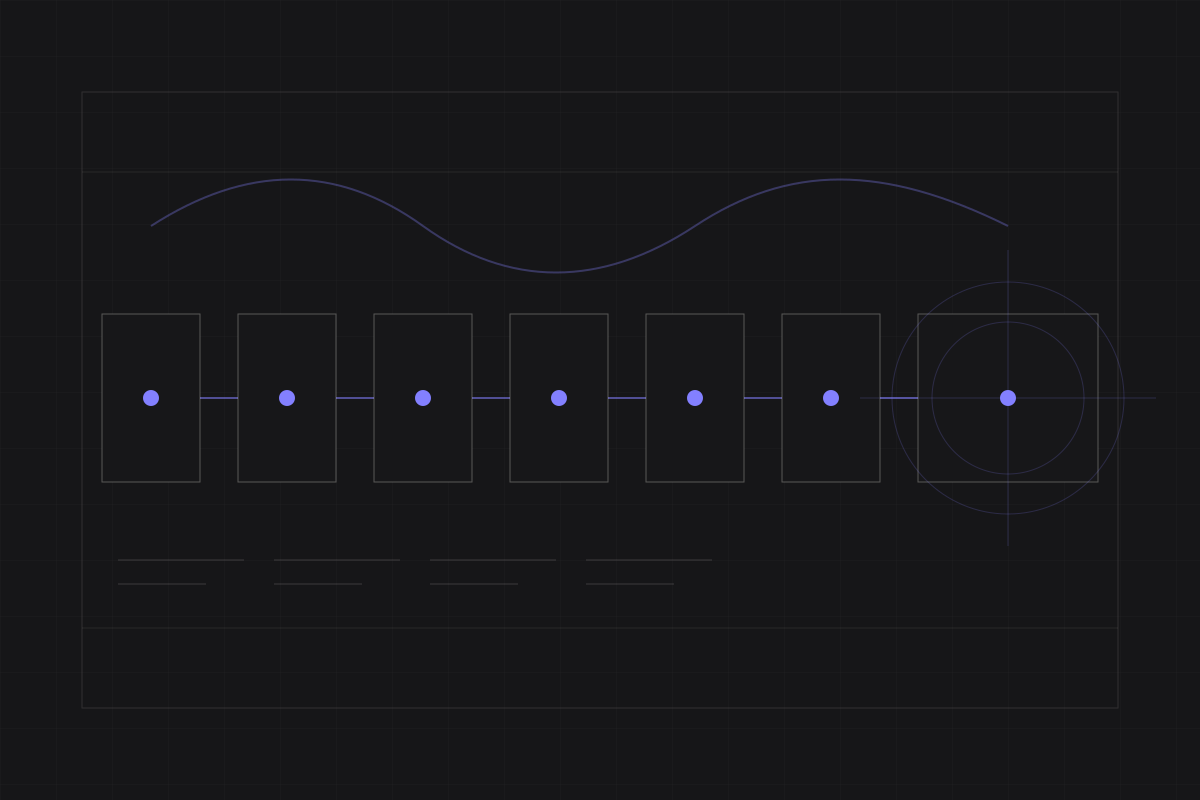
This simplified research flow shows how the current evidence base and benchmark inform questions, criteria, protocol decisions and the selection of measures for future empirical work.
Project 06
01Evidence review
02Technology benchmarking
03Research questions
04Evaluation criteria
05Protocol design
06Measures selection
07Future empirical evaluation
BehaviouralPhysiologicalSelf-reportedPerformance
A process map of ongoing work, not a results timeline.
Mixed evidence
Choose each source of evidence for the question it can answer
Future studies may combine several measures, but not simply because they are available. Each source is selected for the part of the research question it can genuinely inform.
Behaviour / physiology / report / performance4 notes from analysis
01
Behavioural data
What people do while interacting
Observable actions, adaptations, hesitation, coordination and interaction patterns in the study context.
02
Physiological measures
What bodily responses may contribute
Signals selected only where their interpretation is justified and useful to the research question.
03
Self-reported measures
What participants perceive and report
Perceived workload, comfort, confidence, presence or other experiences relevant to the study question.
04
Performance measures
What task outcomes make visible
Accuracy, timing, errors or other task measures defined for the comparison rather than assumed in advance.
Research principles
Keep the evidence types visible
Before choosing a method, I ask what someone needs to decide with the result.
Keep separate during analysis
Observed behaviour
Self-reported feedback
Physiological evidence
Researcher interpretation
Describe the strength of a finding
Supported by evidence
Tentative
Requiring further testing
Current status / Next steps
A foundation for subsequent empirical studies
The work to date has established an evidence base, a structured technology landscape, evaluation criteria, protocol structures and a framework for subsequent empirical studies. Those future studies are not presented here as completed work.